Tanzania's President Kikwete tipped for election win
President Kikwete's supporters held a big rally in Dar es Salaam on Saturday Voters in Tanzania are going to the polls to elect the East African country's president and parliament.
President Jakaya Kikwete, who has been credited with boosting the nation's economy, is seen by many as a favourite to secure his second and final term.
His main opponents are Willibrod Slaa, a former priest, and university professor Ibrahim Lipumba, who say the government has failed to tackle widespread poverty.
Voters are also electing 239 lawmakers.
Continue reading the main story
Related stories
Can polls help tackle corruption?
Zanzibar deal
More than 19 million people were eligible to cast their ballots when the polls opened at 0700 local time (0400 GMT).
A total of 18 political parties are competing, with seven candidates vying for the presidency.
President Kikweke, of the governing CCM party, was elected with more than 80% of the vote in 2005 and is now expecting to win again.
On Saturday, thousands of his supporters danced and cheered during a rally in Tanzania's commercial capital Dar es Salaam.
Opposition candidates like Ibrahim Lipumba accuse the president of reneging on pledges Mr Kikweke promises to reduce poverty, improve health, education and transport, says the BBC's Josphat Makori in Dar es Salaam.
But Mr Kikweke's critics accuse his government of not living up to similar pledges during his first term, our correspondent says.
More than 50% of Tanzanians still live below the poverty line, according to the IMF.
On Sunday, voters in the Indian Ocean archipelago of Zanzibar - which enjoys a degree of autonomy from Tanzania - will also be going to the polls.
They will be electing their leaders for the first time since a power-sharing deal was struck between Zanzibar's two main political parties.
The agreement was aimed at bringing to an end the violence that erupted during Zanzibar's polls in 2000 and 2005.
Sunday, 31 October 2010

Saturday, 30 October 2010
Kikwete remained optimistic about his chances of re-election, Prof Lipumba had urged voters to reject the CCM government

Dar es Salaam — The CCM presidential candidate, Mr Jakaya Kikwete, yesterday hinted on the type of government he will form if he wins tomorrow's General Election.The President, who is fighting to be re-elected to the seat, said more youthful leaders will form the bulk of assistant ministers in his new administration.
He spoke during a live radio interview yesterday on Clouds FM, following in the footsteps of his opponents, Dr Willibrod Slaa of Chama cha Demokrasia na Maendeleo (Chadema) and Prof Ibrahim Lipumba of the Civic United Front (CUF), who had similar interviews this week.
But as Mr Kikwete remained optimistic about his chances of re-election, Prof Lipumba had urged voters to reject the CCM government, saying the party policies were doomed to fail.
Speaking during a televised interview on Thursday night, Prof Lipumba said he was more qualified than Mr Kikwete to lead the country and asked voters to elect CUF.
Prof Lipumba said if given the chance, he would increase tax collection from 15 per cent today to 25 per cent of the GDP in three years' time.
He said Tanzania could not develop out of excessive tax exemptions and poor revenue collection from companies that raked in billions of shillings from the country.
According to Professor Lipumba, Tanzania loses not less than Sh150 billion every year for failing to collect tax from oil companies alone.
In his interview, President Kikwete, who was also scheduled to carry out another televised interview last night, said CCM was sure of victory. He promised to implement all promises that were in the party's manifesto.
He said his commitment to place more young people in the government was intended to establish a good succession plan for public leadership.
He said ten seats in Parliament will also be reserved for the youth should he form the next government.
Another area that he would give priority to is enhancing the efficiency of the civil service. He said the use of the Information and Computer Technology (ICT) will top his agenda to end bureaucracy.
He said the government would offer special services to old people and those with disabilities. In the near future, he continued to say, social services will be given in all parts of the country.
On infrastructure, President Kikwete said his government has already started a programme to build tarmac roads in the country. The aim is to ease transport and thus develop the country's economy.
He reiterated that the traffic jam experienced in Dar es Salaam was a sign of prosperity, but his government plans to solve the problem.
On corruption, Prof Lipumba said his government will not tolerate corrupt individuals.
He said the war against corruption would not take more than six months. He emphasised: "If the corruption war takes more than six months, then consider yourself a failure. My government will arrest and take to court all suspects within six months."
Leonard Magomba
Supporters of the ruling party at a campaign rally (file photo).
He said his government would also put in place strategies to boost local banks and enable them provide loans with affordable conditions to wananchi.
"It is good to have foreign investors and banks, but we must set strategies to protect our local banks. Today all our banks have been sold to foreign investors except the CRDB Bank. Tanzanians own nothing and have no voice on their decisions," said Professor Lipumba.
He said President Kikwete and his government carried the blame of joining the East African Community Common Market without preparing Tanzanians to face its future challenges.
Professor Lipumba added that he was in the race to win, and dismissed those asking him to throw his weight behind Dr Willibrod Slaa of Chama cha Demokrasia na Maendeleo (Chadema).
Friday, 29 October 2010
DR SHEIN IS READY FOR COALITION GOVERNMENT
Zanzibar. Chama cha Mapinduzi (CCM) will emerge victorious in the Sunday General Election, the party’s Zanzibar presidential candidate, Dr Ali Mohamed Shein, has said.
Dr Shein made the prediction in an interview with the German state-owned radio Deutsche Welle in Zanzibar yesterday evening.
He said CCM has a ten-year policy in place and a first rate manifesto that addresses the economy, education, agriculture and industry sectors.
He stated that the formation of a government of national unity which has been agreed upon in the Isles was not something new.
He said he had also talked on the issue in his campaign rallies on the clove Islands. He said he had no problem working with the Civic United Front presidential candidate, Mr Seif Sharif Hamad.
However, he admitted that the Zanzibar Constitution had not explained the duration of the government of national unity, saying the issue was in the hands of Zanzibaris themselves.
Dr Shein brushed aside suggestions that the government of national unity could be the source of dampening democracy in the Isles.
He said governments of national unity have been formed all over the world and had proven not to be the source of impinging democracy.
Dr Shein made the prediction in an interview with the German state-owned radio Deutsche Welle in Zanzibar yesterday evening.
He said CCM has a ten-year policy in place and a first rate manifesto that addresses the economy, education, agriculture and industry sectors.
He stated that the formation of a government of national unity which has been agreed upon in the Isles was not something new.
He said he had also talked on the issue in his campaign rallies on the clove Islands. He said he had no problem working with the Civic United Front presidential candidate, Mr Seif Sharif Hamad.
However, he admitted that the Zanzibar Constitution had not explained the duration of the government of national unity, saying the issue was in the hands of Zanzibaris themselves.
Dr Shein brushed aside suggestions that the government of national unity could be the source of dampening democracy in the Isles.
He said governments of national unity have been formed all over the world and had proven not to be the source of impinging democracy.
GOVERNMENT SECURITY SPY SNEAK IN AT THE CUF SEMINAR
Lipumba faultspolicy of CCM on a million jobs Send to a friend
Friday, 29 October 2010 08:50
digg
By Florence Mugarula, The Citizen reporter
Dar es Salaam: Only 92,000 Tanzanians are employed in the industrial sector, the Civic United Front presidential candidate, Professor Ibrahim Lipumba, said yesterday.
He was speaking to CUF members during what was called the ‘education to voters’ seminar.’ Among other things, the seminar aimed at sensitising the public to turn up in big numbers and vote at polling stations on Sunday.
Professor Lipumba faulted the policy of ruling party, CCM, to provide employment to a million Tanzanians. He said poor plans and weak implementation of policies have led to increased poverty among Tanzanians.
He said the CCM government had failed to provide employment or create employment opportunities as it promised during the 2005 election campaigns.
According to Professor Lipumba, at least one million Tanzanians can work in the industrial sector. However, he explained, the government has totally failed to create employment opportunities and thus caused life to be very difficult in the country.
“The CCM government promised ‘a better life for every Tanzanian’, but from that time things have been going awry. Wananchi are experiencing hardships from time to time,” said Professor Lipumba.
Commenting on the country’s economy, Professor Lipumba said there can be no economic development in a country that has no reliable electric power.
He said bogus electricity contracts and untrustworthy investors have led the country to several problems, including lack of electric power which is the main pillar of economic development.
Professor Lipumba, who is contesting for the presidency for the fourth time, said his government would take the education sector, health and agriculture into very serious consideration.
Among other things, the CUF flag bearer said his government would also initiate a centre for elders to make sure Tanzanians lead a good life even after retiring or being unable to participate in economic development.
Contributing to the seminar, the Kibangu ward candidate, Mr Ali Sindama, condemned the media for what he called misinterpreting political parties’ manifestos.
“The press has been the cause of wrong deliverance of messages between politicians and wananchi. Some journalists just report according to their whims and do not refer to the manifestos,” claimed Mr Sindama.
However, the seminar broke off before time after CUF members said they did not trust the moderator.
The problem started after Mr Omary Kasera, the moderator, failed to say from which institution he was coming.
“This must be a national security officer. He is just here to know our plans before the coming General Election,” charged CUF members.
Friday, 29 October 2010 08:50
digg
By Florence Mugarula, The Citizen reporter
Dar es Salaam: Only 92,000 Tanzanians are employed in the industrial sector, the Civic United Front presidential candidate, Professor Ibrahim Lipumba, said yesterday.
He was speaking to CUF members during what was called the ‘education to voters’ seminar.’ Among other things, the seminar aimed at sensitising the public to turn up in big numbers and vote at polling stations on Sunday.
Professor Lipumba faulted the policy of ruling party, CCM, to provide employment to a million Tanzanians. He said poor plans and weak implementation of policies have led to increased poverty among Tanzanians.
He said the CCM government had failed to provide employment or create employment opportunities as it promised during the 2005 election campaigns.
According to Professor Lipumba, at least one million Tanzanians can work in the industrial sector. However, he explained, the government has totally failed to create employment opportunities and thus caused life to be very difficult in the country.
“The CCM government promised ‘a better life for every Tanzanian’, but from that time things have been going awry. Wananchi are experiencing hardships from time to time,” said Professor Lipumba.
Commenting on the country’s economy, Professor Lipumba said there can be no economic development in a country that has no reliable electric power.
He said bogus electricity contracts and untrustworthy investors have led the country to several problems, including lack of electric power which is the main pillar of economic development.
Professor Lipumba, who is contesting for the presidency for the fourth time, said his government would take the education sector, health and agriculture into very serious consideration.
Among other things, the CUF flag bearer said his government would also initiate a centre for elders to make sure Tanzanians lead a good life even after retiring or being unable to participate in economic development.
Contributing to the seminar, the Kibangu ward candidate, Mr Ali Sindama, condemned the media for what he called misinterpreting political parties’ manifestos.
“The press has been the cause of wrong deliverance of messages between politicians and wananchi. Some journalists just report according to their whims and do not refer to the manifestos,” claimed Mr Sindama.
However, the seminar broke off before time after CUF members said they did not trust the moderator.
The problem started after Mr Omary Kasera, the moderator, failed to say from which institution he was coming.
“This must be a national security officer. He is just here to know our plans before the coming General Election,” charged CUF members.
ZANZIBARI WANT CHANGES

The political atmosphere in Zanzibar has totally changed and this is reflected in the feelings of the Isles dwellers.
A survey by this paper has shown that the newly emerging political feeling is at the peak as the campaigns come to a close with supporters of former rival political parties showing more respect and love to each other.
This unprecedented situation was witnessed yesterday when jubilant members of the Civic United Front and those of Chama Cha Mapinduzi were seen competing in decorating various places using either party’s symbols or colours while boasting that each of the parties will emerge the winner in the General election on Sunday.
The supporters of the two parties with biggest followings in the Isles were seen yesterday placing party flags and flowers at the junction of Michenzani Road a few metres from Mwembe Kisonge in Zanzibar town.
While CUF supporters were flying party flags and carrying huge pictures of their Isles presidential candidate, Seif Sharrif Hamad, as they paraded around the area at night, those of the ruling party went about decorating road pavements in the same place with party colours and flags.
The incident attracted the attention of many passersby forcing some of them to stop by.
Vehicle drivers were seen stopping by for a while to watch pasted pictures of CCM presidential candidate for Zanzibar Dr Ali Mohammed Shein.
At Darajani and Mbweni Streets, two similar incidents also happened yesterday whereby supporters of the two parties, peacefully embarked on decorating the streets heralding establishment of the first government of national unity in the Isles after the General Election on Sunday.
The scene this time is very different from the previous general elections whereby supporters of the two rival parties were not tolerating each other.
International observers and Zanzibaris have been watching the unfolding situation with interest as the peaceful atmosphere descends to the islands where political turmoil and violence have always reigned during election periods.
While all this is happening, both CCM and CUF presidential candidates in Zanzibar have urged supporters to prepare themselves for the swearing in of either candidate early next month.
Dr Shein who has already plied four times between Pemba and Unguja for his campaigns said he was hopeful that Zanzibaris would pick CCM to continue ruling the Spice Islands.
In a campaign rally at Dimani grounds, in Unguja West District, he said there was no party capable of wrestling down the ruling CCM.
“Just prepare your suits and wait for my swearing in on November 5,” he said.
Dr Shein, who is the outgoing Union Vice President, said he had already prepared his suit for the swearing in ceremony.
“Our way to the State House is clear and we are now heading to the House,” Dr Shein said amid cheers from supporters.
He said in the Sunday election, his party would emerge the winner by scooping all the seats.
The former medicine doctor, Shein said CCM was a strong party and the only one capable of bringing solutions to problems facing Zanzibaris.
He further said that his party had done a great job in the past 45 years of bringing progress to people in the Isles and had a clear and strategic manifesto spelling out the direction of the islands.
For his part, Seif Sharif Hamad, who is in Unguja to finalise his campaign trail, called upon his supporters to believe that their party “will win the Isles presidential post for the first time.”
Hamad, a former teacher turned politician, said that he had no problem with Dr Shein’s bid to prepare his suit for the swearing event because “he will use it when swearing as first Vice President on November 5.” Under the government of national unity, Zanzibar will have a president at the top and two vice presidents from the two parties of CUF and CCM.
He called on the people not to fear the presence of Tanzania People’s Defence Forces in the Isles because they would respect the people’s decision after the election.
He said the presence of the forces in Zanzibar was constitutional and it was not established for the purpose of safeguarding CCM and when the people make decisions it must respect them.
Government threatens press in pre-election Tanzania

As the October 31 national elections draw near, Tanzania's media is in a frenzy trying to cover the close race between the two leading presidential candidates. But government threats and draconian media laws may be getting in the way of objective coverage.
All eyes are on the contest between incumbent President Jakaya Kikwete of the ruling Chama cha Mapinduzi (CCM), or "Party for Change," and a surprisingly successful challenger, Dr. Wilbroad Slaa from the Chama cha Demokrasia na Maendeleo (CHADEMA), or "Progressive Democratic Party."
Kikwete, who won the 2005 elections with a landslide 80 percent of the vote, has seen his popularity plunge this month to 38 percent, according to Tanzanian polls. "Slaa has emerged as an unexpected presidential candidate and his message of change is resonating with voters anxious for a new direction," political commentator Azaveli Lwaitama told Reuters.
Whether the Tanzanian press feel at liberty to cover this tight race is another matter. Critical reporting on the government during this sensitive time appeared risky after Ministry of Information Permanent Secretary Sethi Kamuhanda toured print media offices earlier this month, threatening to shutter any media house that "put the government in a bad light," state television reported. More than 50 human rights and media organizations issued a joint statement last week, claiming the government has threatened the press in advance of the forthcoming elections.
Since polling began, the Registrar of Newspapers, a government-run licensing agency, has been busy issuing letters to newspapers, warning against any negative coverage of the government, local journalists told CPJ. Three private weeklies, Mwanahalisi, Raia Mwena, and Tanzania Daima have all been warned by the Registrar to avoid coverage deemed "inciteful" by the government or face suspension.
"Such kinds of threats have been common from the Registrar of Newspapers, whom the minister [of information] uses as a means to enforce self-censorship," the chairman of the Tanzania Editors' Forum, Absalom Kibanda, told me.
The country's leading Kiswahili daily, Mwananchi, received two letters from the Registrar recently threatening to suspend the paper for negative government coverage, Managing Editor Theophil Makunga told me.
"For quite a long time now and during this election campaign period, in particular, your newspaper has been writing negative stories about the government," one of the Registrar's letters claimed. "Should you continue publishing the articles, the government will not hesitate to suspend or deregister your newspaper as per the laws of the land."
The letter was signed by the Registrar's deputy director, Raphael Hokororo. Mwananchi is considered the most balanced and professional newspaper in the country and commands the highest readership, which makes this threat particularly troubling, the former Tanzania Editors' Forum chairperson, Sakina Datoo, told me.
The Registrar's letters to Mwananchi alleged that the paper had denigrated the government but provided no examples of material the authorities deemed offensive, Makunga said. "The Registrar has no argument at all," he told me. "That's why they use sweeping, generalized statements in their allegations." Since the presidential campaigns started on August 20, Makunga said, his paper has not received a single complaint from any of the political parties participating in the race.
Makunga fears the ruling party may shut down his paper using the vague allegations put forth in the Registrar's letter. "It's a sign of desperation on the side of the CCM. They believe if Mwananchi continues to report objectively, CCM candidates will lose votes," he said. The paper has filed a complaint with the independent press ombudsman, the Media Council of Tanzania.
But Hokororo, the Registrar's deputy director, told me that the Mwananchi staff has exaggerated the issue. "The letter was supposed to be a private letter but they published it to get media attention. It was a warning, not a threat as they have portrayed it," he said.
Recent warnings aside, the Tanzanian government has reams of anti-press legislation it can dangle above the media's heads to ensure self-censorship. The Newspaper Act of 1976, for instance, allows the information minister wide discretionary powers to ban newspapers.
"It gives the minister powers to close down any newspaper for 'inciting'. Since the term is not defined, it's up to the minister to interpret it as he or she wants," Datoo said. Investigative reporting on any area the government considers classified is a punishable offense under the National Security Act. Later laws, such as the Civil Service Act and Public Leadership Code of Ethics Act, block access to information for journalists. The media laws in Tanzania "force all media to practice public relations and avoid investigative journalism," media analyst and Saut FM Producer Dotto Bulendu told me.
Saut FM, a private station attached to St. Augustine's University, has faced its own challenges trying to cover the elections. Bulendu told me that he and Edwin Soko, a Saut FM reporter, received anonymous threats last month via text message accusing them of negative reporting on the ruling party.
"The messages threatened to kill us if we continued to work at the station," he added. But the threats were somewhat misplaced; the Tanzanian Communications Regulatory Authority (TCRA) had already taken the station off the air in August. The Authority's public relations manager, Innocent Mungy, told me Saut FM had been closed on purely technical grounds because the radio signals interfered with aircraft communications.
Bulendu is skeptical of the TCRA's findings. The station, he noted, has operated since 1997. "Why would we have signal interference problems now and not before?" he demanded. "Why just before the elections?" And he has little recourse: the 1993 Broadcasting Act empowers the TCRA to shut down any station at any time, he added. He hopes Saut FM will be back on the air this week, just days before the poll results.
Over the years, press freedom monitors, including CPJ, have not identified many cases of Tanzanian authorities attacking the press, which makes the country appear to have a better media freedom record than many East African nations. But what happens in Tanzania is something more insidious: Thanks to the country's sweeping anti-press laws, the threat of closure by authorities is enough to curtail any wayward critics. For a ruling party facing a tight presidential race, that's a formidable advantage.
Tom Rhodes is CPJ’s East Africa consultant, based in Nairobi. Rhodes is a founder of southern Sudan’s first independent newspaper. Follow him on Twitter: @africamedia_CPJ
TANZANIAN will vote against corruption?


JAKAYA KIKWETE AND W. SLAA
there is one thing at the top of 18-year-old Moshi's mind.
"I will vote against corruption... I can't elect corrupt politicians," he says.
Next Sunday, 31 October, Tanzania holds elections for both the president and the parliament.
Moshi plans to vote for the main opposition challenger for the presidency, Willibrod Slaa of the Chadema party.
Continue reading the main story
“
Start Quote
Tanzania needs a complete and immediate revolution in the system of accountability and leadership”
End Quote
Ananilea Nkya
Anti-corruption campaigner
BAE: The Tanzanian connection
Mr Slaa shot to prominence because of his courage in parliament where he consistently exposed corruption scandals, and he is now drawing big crowds at his election rallies up-and-down the country.
He is cashing in on people's feelings towards corruption, and has promised to fight it - earning himself a wide following among the youth.
His message to voters has been clear: "The CCM [ruling party] cannot fight corruption because it is the product of corruption... If elected, we will fight corruption from the top."
Corruption record
Within Africa, Tanzania is not often singled out for its poor record on corruption.
But it has had its fair share of major corruption scandals in the past few years, running into hundreds of millions of dollars, and implicating many of the highest-placed figures in the country.
And a recent index drawn up by the Revenue Watch Institute put Tanzania close to the bottom of a global list in terms of the transparency of its mining and minerals deals - only Algeria, Democratic Republic of Congo, Equatorial Guinea and Turkmenistan scored worse.
"Tanzania needs a complete and immediate revolution in the system of accountability and leadership," says activist Ananilea Nkya, who won an award from the US embassy earlier this year for her "courage".
When President Jakaya Kikwete came to power in 2005, it was largely on an anti-corruption ticket.
And launching his campaign this time round, he defended his record.
"The government, in the past five years, has fought corruption zealously. We have amended the anti-corruption laws and we have strengthened the anti-corruption bureau.
"All the people are witnesses on how many prominent people have been taken to court for corruption, what else do you want us to do?"
Top names accused
The former Finance Minister Basil Mramba, the ministry's permanent secretary Gray Mgonja, and the former Energy and Minerals Minister Daniel Yona are currently battling corruption allegations in court.
The trio are charged with abuse of office over an allegedly irregular awarding of a contract to audit gold.
President Kikwete (L) campaigned with Edward Lowassa (R) who resigned amid corruption claims In 2008 the Governor of Tanzania's Central Bank, Daudi Ballali, was sacked after an independent international audit found the bank had paid out more than $100m (£66m) to local companies, some of which reportedly did not exist.
Soon afterwards, the then Prime Minister Edward Lowassa and two ministers resigned, amid a huge public outcry over their alleged involvement in awarding a big contract to a ghost US electricity company.
They all maintained their innocence, but the so-called Richmond affair gripped the nation.
All this is presented as a victory by President Kikwete and the ruling Chama Cha Mapinduzi (CCM) party.
"Our party is committed towards fighting corruption. Those who are accused of grand corruption are in court, and the president has demonstrated that he tackles corruption from the top," said CCM campaign manager Abdulrahman Kinana.
Real justice?
But critics are not convinced that real action is being taken.
Early this year the ruling party convened and cleared those implicated in the Richmond affair of any wrongdoing.
Willibrod Slaa is presenting a strong challenge to President Kikwete And at the Central Bank - although a few relatively low-level businessmen were charged along with some junior central bank staff - no high-profile personality has ever appeared before the dock.
"Those in court are scapegoats," said Mr Slaa.
And the country's most popular newspaper columnist, Ansibert Ngurumo, believes corruption is worse now than under previous governments.
He cites the handling of the controversial military radar deal between Britain's BAE and the Tanzanian government.
Former Attorney General Andrew Chenge was allegedly linked to the deal and - although he denied wrongdoing - he resigned after reports that he held a large sum of money in an offshore bank account.
But now, while Mr Chenge has been appointed a member of the ruling party's ethics committee, Mr Ngurumo says he has been summoned three times by state agents over his critical newspaper articles.
President Kikwete is tipped to win another term in office in these elections, but with a smaller margin than the 80% he scored last time round.
Whatever the outcome, Tanzanians will be watching their leader's next moves closely.
LIPUMBA FREE EDUCATION IS POSSIBLE IN TANZANIA
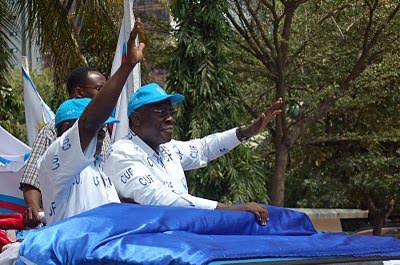
THE Civic United Front (CUF) Union presidential candidate, Prof Ibrahim Lipumba, on Thursday defended his party’s policy of giving free education to all if elected this Sunday, saying his government would increase revenue collection to 22 per cent to finance the plan.
Prof Lipumba who was speaking at the closing of his election campaigns in Dar es Salaam said his government would also make sure the country retains 30 per cent of revenue from the mining sector to facilitate development.
“We want to raise revenue collection from the mining sector from the current 3 per cent to
30 per cent. This is possible because in countries like Botswana they retain up to 60 per
cent of the revenue from the sector,” he said.
He also vowed to remove tax holidays which he claimed make the country suffer a loss of over 100bn/- a year. Prof Lipumba whose speech focused much on economic aspects, further said that his government would minimize state visits and official tours abroad to cut down costs.
More communication with other countries, he said, will be done through embassies. He also noted that according to President Jakaya Kikwete, some 30 per cent of the government
expenditures were stolen every year, adding that in just five years about 11.8tr/-, the government monies ended up in people’s pockets.
Prof Lipumba further emphasized on the formation of the government of national unity
that will have a small cabinet of between 15 and 20 ministries only, as another way of reducing government expenditures.
In another development, Prof Lipumba promised to arrest all corruption suspects starting with those who were alleged to have involved in a radar scandal and make sure the money stolen from the government is returned to treasury.
He also noted that without having reliable electricity supply in the country it would be very difficult to create meaningful employment opportunities, pledging to uncover more sources of energy in his tenure if elected.
Prof Lipumba also promised to adopt the United Nations call to governments to introduce the system of ‘each student, one laptop’ saying that if elected students would start to enjoy
such ICT facilities in their schools.
He admitted that the government has constructed more schools and increased enrolment but noted that the quality of education was still alarming and that his government would give quality education.
Earlier, the party’s running mate, Mr Juma Duni Haji, noted that the country’s only problem was lack of strong economy, boasting that Prof Lipumba was the only man to answer that call. Mr Haji urged the electorate to turn out in a big number and vote for CUF.
Monday, 25 October 2010
They hoped Dr Slaa would improve the living standards of all Tanzanians if he becomes president.

Many people have hailed the presidential candidate on the Chama cha Demokrasia na Maendeleo (Chadema) ticket, Dr Willibrod Slaa, for articulating the party’s policies in a televised debate on Saturday.
They hoped Dr Slaa would improve the living standards of all Tanzanians if he becomes president.
From Arusha, our Bureau Chief Zephania Ubwani reports that the programme ran by ITV drew hundreds of people in villages and towns in Arusha and Manyara.
At a remote village of Haydom in Manyara Region, several bars and groceries were crowded, with people watching and listening to the former Catholic Church priest.
.
“It is obvious that Dr Slaa has gained a mileage in his campaign for presidency. Everybody seems to be impressed by the way he articulated his priorities,” said Dr Haite Samhenda of the Haydom Lutheran Church.
He told The Citizen in a telephone interview that the Chadema presidential candidate appeared to be popular among various sections of
people in the northern regions for promising to tackle chronic issues such as land conflicts.
Mr Wilson Girengay, a businessman at Katesh in Hanang District, said Dr Slaa was attracting many people because of his ability to analyse the country’s social and political situations and why he was aspiring for the presidency.
However, he said he was concerned about the recent violence involving Chadema and CCM supporters in Maswa District in Shinyanga Region, which resulted in the death of a driver of a parliamentary candidate on the ruling party’s ticket.
Mr Girengay was worried that the incident might tarnish the image of Chadema and its presidential candidate.
Mr Elikarim Mangi, a trader based in Babati, criticised the government for failing to resolve land conflicts involving pastoralists and livestock keepers in various parts of the country.
“He (Slaa) has demonstrated to be bold in addressing burning issues facing society and will attract votes from those sections of society,” he stated.
Mr Iddi Mfinanga, a shopkeeper in downtown Arusha, described Dr Slaa as a presidential material and that he had attracted huge crowds since the election campaigns started.
The director of the Arusha Non-Governmental Organisation's Network, Mr John Bayo, said what the Chadema presidential candidate
was promising was in line with aspirations of many Tanzanians.
Dr Mark Bura, a health management consultant based in Arusha, said the former Karatu legislator appeared to give a tough challenge to CCM presidential candidate Jakaya Kikwete who is seeking re-election.
However, he said he did not agree with him on the provision of free education, saying it was impracticable. On whether Chadema
would form the next government, he said he was not sure.
A CCM leader at Nangwa village in Hanang, Mr Peter Hayumwa, also said Dr Slaa would not deliver in promise on free education if he comes to power.
“The country’s economy depends on revenue collections,” he said. He doubted whether Chadema would win the October 31
General Election because its network was not as vast as that of CCM.
Mr Mefunya Gapjojig, a retired district commissioner who now lives at Dirma village in Hanang, also played down the idea of free education, saying it did not even work during the government of Mwalimu Nyerere.
From Serengeti, Anthony Mayunga reports that Dr Slaa’s ability to articulate issues, attracted many people. They thronged bars and groceries to watch the presidential candidate fielding questions on a myriad of issues.
A worker with a non-governmental organisation, Right To Play, Mr Dennis, said Dr Slaa put across his message to almost every segment of society.
“I have been touched because he has analysed our problems and how he is planning to solve them in a way which I have never heard of before,” he said.
Mr Marwa Mwita from Rung’abure ward was happy with Dr Slaa’s investment plans and resolve to ensure the national resources befit Tanzanians and investors equally.
At Ubungo Bus Terminal, people gathered at the waiting lounge, where the TV sets have been installed to follow the debate.
In separate interviews with The Citizen after the end of the event, some people praised Dr Slaa for his ability in answering questions in the televised debate.
“As we approach the polling day, through this programme, Dr Slaa will have succeeded in passing his messages to those who have not heard his policies,” said Mr Rulagola Gunaguje, a city resident.
Mr Mengi Mbena said he listened to Dr Slaa and discovered that he was a serious candidate.
Mr Victor Mwakapusya, a Sinza resident in Dar es Salaam, said Dr Slaa addressed the religious issue properly and hoped that the debate would not be pursued further by some media outlets.
Mr David Mosha, from Mbezi in Dar es Salaam, said although Dr Salaa tried to cover many areas, he did not go deep into important issues such as thefts of public funds.
Ms Agatha Mujuni said before the debate she did know Dr Slaa well. “But I have now understood his position on various issues,” she said.
At Tabata Kimanga in Dar es Salaam, most bars stopped playing music to give patrons the chance to listen to the debate.
Mr Philbert Laurian congratulated Dr Slaa on his courage and strength to “face the public without fear and clearly state his policies”.
“Everybody knows what he has done in Parliament… with that courage he can make our country prosperous,” said Mr Laurian.
Ms Haika Mcharo said the debate showed that Dr Slaa knew a lot of problems facing Tanzanians and he was in a better position to deal with them.
But Mr Abdullah Musa said he was unhappy with the choice of the audience which was permitted to ask questions. “They should have invited senior editors and academics to ask his sensitive questions,” he suggested.
At Kimara, on the outskirt of Dar es Salaam, people supported the Chadema’s idea to participate in the live show.
“I think President Jakaya Kikwete needs to do so before October 31. We need to see presidential candidate being asked questions,” said Ms Anastazia Shangali.
Mr Enidi Mosha said Dr Slaa had made a good thing to discuss peace and security ahead of the country’s General Election on Sunday.
At Mabibo Makuburi in Dar es Salaam bars were crammed with people, listening to the debate.
“The man knows problems facing fellow Tanzanians, but I doubt whether other people are as committed as he is,” Mr Wilfred Katungutu, a resident of Mikongeni at Makuburi in Dar es Salaam said.
“He is fighting solo! Most of us like him just because he is patriotic but who else in his party has such qualities?” Ms Veronica Sylvester, a resident of Makuburi, said.
The arena this time round will be mainland Tanzania and not Zanzibar


The stage was set last week for a showdown on October 31, when Tanzania goes into its most tense general election ever, with incumbent presidential candidate Jakaya Mrisho Kikwete trailing an opposition candidate in one of the three opinion polls, for the first time.
Tanzania security forces warn against election chaos
Political analysts say Kikwete, 60, and the ruling Chama cha Mapenduzi have failed to prevent corruption, and with government performance becoming the central issue of the poll, then the once unthinkable — the CCM losing power for the first time since Independence — is looking like an outside possibility come Sunday.
For a country that has been known for political stability, Tanzania’s election this time round is like no other: A first-time opposition candidate, Willbrod Slaa of the Chama Cha Demokrasia na Maendeleo (Chadema), whose candidature was a political gamble that is paying off, throwing the race wide open; last-minute electoral reforms; talk of rigging and fear of violence.
The second election after former president Julius Nyerere died is being held at a time the gap between the rich and poor is growing, although more money is being made from the country’s extractive industries, taxes and inflation are high and there are unprecedented levels of corruption both in the economy and the political process.
The arena this time round will be mainland Tanzania and not Zanzibar, after constitutional reforms that obligate the party that wins the election to form a government of national unity for that island only.
An opinion poll by non-government organisation Tanzania Citizens Information Bureau found that if elections were held between September 27 and October 10, Dr Willbrod Slaa, 62, would obtain 45 per cent of the votes cast against Kikwete’s 41 per cent. Two earlier polls, one by the Synovate group and the other by a University of Dar es Salaam think tank, showed that Kikwete would win with 61 per cent and 71 per cent respectively.
Analysts say that in the eyes of the public, CCM has gradually deviated from its founding values — fighting corruption, ensuring less spending on government administration and provision of social services — and that its leadership is firmly in the pockets of the capitalist class.
At the same time, Chadema, a 1992 breakaway from CCM — then led by Edwin Mutei, former governor and finance minister who disagreed with Nyerere, his boss then, on fiscal policy — has been making the fight against corruption the key plank of its electoral platform.
This play of perceptions seems to be earning Dr Slaa political mileage, and troubling Kikwete’s advisers.
For instance, Kikwete is campaigning for Edward Lowassa, former prime minister to return to parliament, even though the latter was forced to resign because of the Richmond scandal, where he presided over an illegal procurement deal of fake and over priced thermal generators.
“Kikwete’s association with such people, and campaigning for them, contradicts CCM’s founding principles and introduces a credibility gap in CCM,” said Azaveri Lwaitama, a political analyst and don at the University of Dar es Salaam.
Secondly, the calibre of leaders in CCM has changed over the years; in Nyerere’s era, wealthy members of the party were not allowed to take up leadership positions as per the organisation’s leadership code. Currently, the wealthy are calling the shots at CCM, Dr Lwaitama said.
Kikwete has also been accused of looking on politicians and bureaucrats close to CCM and allocating houses formerly owned by the government to themselves.
On his part, Kikwete has made the economy the centre of his campaign, pledging infrastructural development, job creation and improvement in agriculture.
Zanzibar holds historic presidential election

Zanzibar holds historic presidential election
25th October 2010
Seif Sharif Hamad, Civic United Front (CUF)
Ali Mohamed Shein, Cahama Cha Mapinduzi (CCM)
AFTER decades of political turmoil, Zanzibar is scheduled to hold a historic presidential election on Sunday to choose a successor to outgoing President Amani Abeid Karume.
For the first time in Zanzibar's colonial and post Revolution history, both the presidential candidates in the election hail from Pemba Island.
This means that for the first time since its independence in 1964, Zanzibar will have a president from the smaller of the two islands.
Unguja has traditionally dominated Zanzibar's economic and political setup, triggering longstanding complaints from residents of Pemba Island.
Thanks to a referendum passed into law earlier this year, following a gradual rapprochement between the ruling Chama Cha Mapinduzi (CCM) and opposition Civic United Front (CUF), a coalition government will be formed after the election.
"This is the first time in Zanzibar since the colonial and post colonial period that the country will hold peaceful elections," said Prof. Palamagamba Kabudi, dean of the University of Dar es Salaam's faculty of law.
"The margin of victory in Zanzibar is expected to be very small by which ever party that wins the election. This is typical for many island nations where the population is small and the voters are few."
There are less than 500,000 registered voters in Zanzibar's presidential election compared to the 19.6 million voters in mainland Tanzania.
Zanzibar is holding its presidential election on the same day with mainland Tanzania.
Analysts say a close result is expected in Zanzibar where Seif Sharif Hamad of CUF is locked neck and neck for the presidency with the ruling CCM party's Ali Mohamed Shein.
"This is also the first time that both presidential candidates are from Pemba. There will be no winner or loser in this election because CCM and CUF have agreed to the formation of a coalition government after the election," said Prof. Kabudi.
"Unlike mainland Tanzania, there are no undecided voters in Zanzibar. Voters there are equally split between supporters of the ruling party and opposition party."
Following are short profiles on each of the two leading candidates.
SEIF SHARIF HAMAD, CIVIC UNITED FRONT (CUF)
* The 67-year old Hamad was expelled from the ruling CCM party in 1988 after serving in senior government positions, including Zanzibar Chief Minister (1984-1988). He was jailed for 30 months on political charges (1989-1991) before his conviction was overturned by the appeals court.
* He has run for the Zanzibar presidency three times since 1995 and lost by small margins to the ruling CCM party. The CUF has consistently accused CCM of vote rigging, claiming it was robbed of outright victory in all the past three elections.
* Hamad graduated from the University of Dar es Salaam in 1975 with a degree in political science, public administration and international relations.
* He was born in the smaller Pemba Island in the Zanzibar archipelago where he enjoys strong support. The CUF also has considerable support in the larger Unguja Island.
* He has promised to improve social services, fix the economy, raise salaries of public workers, seek more autonomy for Zanzibar and foster close ties with Islamic countries. About 99 percent of Zanzibar's estimated population of one million are Muslims.
ALI MOHAMED SHEIN, CHAMA CHA MAPINDUZI (CCM)
* The outgoing Vice-President of the Union government has a PhD in biochemistry and metabolism from the Medical School University of Newcastle Upontyne.
* The soft-spoken Shein is widely respected and is among a few
politicians with a clean record in government. But he is not considered charismatic nor a rousing orator.
* He was catapulted to the national political spotlight from relative obscurity as a Zanzibar cabinet minister after being appointed Tanzania's vice-president in 2001 following the death of former VP Omar Ali Juma.
* Shein, aged 62, was born in Pemba like his CUF presidential rival and has pledged to improve the living conditions of the people if elected president. He is expected to make some inroads in the island that has traditionally been the opposition's power base.
* He has promised to consolidate the work of previous CCM governments and improve Zanzibar's economy, which relies on tourism.
Be the first to comment
Slaa will be a ‘lame’ president since it is very likely that the ruling party will have a majority of seats in parliament.

This is a sequel to my article on ‘Election campaigns and the politics of performance’. Therein we looked at the power of performance. Now we look at the power of psychology and personality.
It is quite clear that Dr. Wilbroad Slaa’s decision to run as a presidential candidate has tilted the balance of power. Now the debate is no longer about whether the ruling party’s candidate will get a landslide victory - as in the previous election. Rather, it is about by how much that victory will be cut.
For the more optimistic, who draw inspiration from the rise of Barack Obama against all odds, everything is possible. However, to the more cautious, who have not forgotten how the then celebrated Augustine Mrema did not become the president in 1995, this is a delusional hype. ‘Yes Slaa can’ is thus pitted against ‘No Slaa cannot’.
Frankly, I think it needs nothing short of a miracle for Slaa to win. But there is something in this election that is different from previous elections. It is coming at a time when, for a combination of reasons, many more people have registered to vote. So, it is difficult to have a situation, like the one we had in 1995, when one opposition party’s candidate blamed the massive crowds who attended his campaigns for his loss. Why? Simply because they could not and did not vote as they were not registered.
This time the crowd matters. As I said during the registration period, a number of people - including many youth - have registered not necessarily because they want (ed) to vote. All they need (ed) was a card that will help, particularly the unemployed, have a sense of identification when opening a bank account or, as a colleague alerted me recently, to register a Sim card. It is in this regard that at 19,670,631 - the official figure in the National Electoral Commission’s (NEC) permanent voter’s register - nearly half of the population is eligible to vote in this election.
Now, regardless of political parties’ weaknesses in data storage and processing, it is a well-known fact that, in terms of membership, the ruling party can hardly boast a quarter of that number. This implies that many of those who have registered, including myself, are the swing voters. We can swing either way in terms of the personality and policy of the candidate.
This is what happened in 2005 when the ruling party fielded a very attractive personality. It is now happening as one of the opposition parties has fielded a very influential personality. But that is not enough to make Slaa overcome the strength or experience of the ruling party election machinery. It is another factor, what I call a reverse bystander effect, that can do this.
In social psychology a ‘bystander effect’ happens when a number of people - the bystanders - in an emergency situation increases. This causes a diffusion of responsibility as they end up thinking that someone else will intervene. In such cases an emergency can simply pass on unattended to.
One can hardly claim it to be treason to state that in a way the country has been in a ‘state of emergency’. The war on grand corruption is too overwhelming. Its attendant impoverishment is unbearable. The voters are desperate for change. Slaa is indeed using this as his policy ace card. What I am observing so far is some sort of a reverse bystander - or maybe I should call it ‘byvoter’ - effect. Increasingly, people are deciding to vote for Slaa since they think most people will vote for the ruling party’s candidate anyway.
Coupled with massive voter awareness and election campaigns, it is possible that Slaa will win the presidential seat. But, again, it is also quite possible that Slaa will be a ‘lame’ president since it is very likely that the ruling party will have a majority of seats in parliament. I am not sure how well prepared the Constitution is to deal with such an outcome. One thing I am very sure of: such an eventuality will open a new chapter in Tanzania’s quest for democratic constitutional reform. Slaa may not become president. But his candidature is democratising us. Either way he wins.
Two Pemban candidates fight battle for Pemba votes


WITH six days to go before the polling day, two main Zanzibar presidential hopefuls, Dr Ali Mohamed Shein (CCM) and Mr Seif Sharif Hamad (CUF) are engaged in the final battle in Pemba.
Both candidates are staging vigorous campaigns to woo as many votes as possible in the race for the Zanzibar State House. Dr Shein is reported to have intensified door-to-door campaigns by meeting the elderly, women and youth groups and is engaged in a few selected public rallies.
Mr Hamad, on his part, is staging campaign rallies and visiting villages. Dr Shein and the CCM campaign team in Pemba are asking over 100,000 potential voters to pick the ruling party.
Dr Shein says CCM has proved to be the champion of development, with practical and implementable election manifesto compared to other parties in the race.
"Elect me and all other CCM candidates so that we continue developing Zanzibar. "CCM governments have done a lot. The success stories include roads, bridges, electricity and better living standards.
"I will follow footsteps of my predecessors in preserving our unity, peace, and stability," Dr Shein says.
He is expected to have a public rally at Chakechake, Monday afternoon.
Dr Shein who always holds his party's manifesto in his hands when addressing campaign rallies, argues that he would make the best ever president for Zanzibar. He says that he has enough experience in leadership after more than nine years as union vice- president.
He promises to continue improving education, farming and fishing and strengthening of the union, fighting graft and minimise crime. Mr Hamad who had been addressing campaign rallies twice a day over last week, called for free, fair and transparent polls next Sunday.
He said he was not going to rest until his ambition of making each family in Zanzibar manage to have good meals.
Speaking at campaign rallies at Chambani and Mtambile constituencies in Pemba on Saturday, Mr Hamad promised to create more jobs for youths, reduce tax, ensure commitment to work, improve health and fight discrimination.
"Shortly after taking over the Zanzibar presidency, I will abolish the law that prohibits farmers from selling cloves freely. This is a despotic law.
"I will make sure farmers enjoy free market for cloves," Mr Hamad said. Cloves remain the leading cash crop on Pemba Island.
He said that review of revenue plans and reduction of tax would enable women buy the popular traditional cloth, khanga, at a cheaper price compared to the current 4,000/- a pair and youth would afford new clothes instead of relying on second-hand ones.
Mr Hamad said that he would need just 100 days for people to start witnessing changes including cleanliness in hospitals and availability of essential drugs, as he asked to votes.
Monday, 18 October 2010
Lawyers challenge Kikwete government

Dar es Salaam — A petition has been filed in the High Court seeking a declaration that an article of the constitution prohibiting courts from enquiring into presidential election results be declared unconstitutional.
Mr Denis Maringo and the Centre for Justice and Democracy Limited have sought the declaration that article 41(7) which limits the jurisdiction of courts from inquiring into the election of a candidate, once declared by the National Electoral Commission (NEC), is unreasonable and violating citizens' rights.
They argue that the article infringes upon article 13(6)(a) guaranteeing every citizen access to courts whenever he/she feels it right has been infringed upon. They feel that the article was harmful to the doctrine of separation of powers and independence of the Judiciary.
Respondents in the case filed in on Wednesday are the Attorney General, who is also the government chief legal adviser and the NEC.
In the petition likely to draw much attention from the public, the petitioner also accuses the president of breaching the constitution when he prematurely dissolved the parliament before its mandatory five-year tenure.
President Jakaya Kikwete is standing for re-election.
Mr Maringo argues that the suspension of the house by President Jakaya Kikwete on July 17 this year violated article 65 (1) of the constitution which speculates that the constitutional tenure of the legislative body shall be five years.
He says dissolving the parliament ahead of time has denied Tanzanians continuous access to the government directly and through their elected representatives.
He further argues that the suspension of the Union Parliament breached the constitution by burying the doctrine of parliamentary supremacy and checking of balances within the government.
Mr Maringo argues that the petition was of utmost urgency, and has asked the court to hear and determine it before the General Election is held on October 30.
"The legislators in the Union commenced their five-year constitutional term on December 4, 2005 when they were voted into their respective constituencies. The five-year term for parliamentarians under the constitution would have effectively ceased not earlier than December 5, 2010 or December 30, 2010," he argues.
The petitioner is also challenging the legality of voting rules compelling a voter to vote at a place he registered, specifically citing "exclusion" from voting of University of Dar es Salaam students who had registered to vote at their respective academic institutions.
Over 60,000 students of higher education who had registered in their respective institutions are likely to miss chances to vote in the October General Election. This is because the government postponed the opening of the universities until after the General Election because of, among other things, lack of funds.
Mr Maringo, who is also a lawyer, stocks analyst and journalist, all combined, has also sought a declaration that the 40-year requirement as the minimum age for contesting for the presidency is constitutionally discriminative. He wants the court to direct a sitting of a special Constitutional Assembly to rectify the anomaly before elections are conducted.
The petitioners are also seeking an order to make it imperative for the respondents to translate the electoral laws into Kiswahili before the October elections to enable the majority of voters know their rights and obligations pertaining to the universal suffrage process.
Insisting on the dominance of Kiswahili during elections, the petitioners want the court to invalidate the law requiring electoral candidates to be conversant and fluent in Kiswahili while the majority of laws of Tanzania are published in English.
They also challenge the law requiring prospective candidates to alternatively be literate in English while all parliamentary debates and most of the government business are conducted in Kiswahili.
The petitioner has sought the court's intervention to reconfigure and reconcile what he described as an "apparent contradiction" between articles 66 (1) (b) and 66(1) (e) which cause over-representation of women in the house.
He argues that while the former guarantees 30 special women seats, yet the latter provides for other women seats implicitly, thus causing over-representation of one category of citizens at the expense of other vulnerable groups like the disabled and elders for diluting the voters' powers to choose.
They have sought a declaration and order that article 66 (1) (e) mandating the president to nominate a certain number of women among members nominated by him is both unreasonable and unconstitutional, for the same has been guaranteed in article 66
Kikwete Challenger Ahead in Opinion Poll


Dar es Salaam — A new opinion poll has put Chama Cha Demokrasia na Maendeleo (Chadema) presidential aspirant Dr Willibrod Slaa ahead of all the other candidates for the October 31, General Election.
According to the poll commissioned by a nongovernmental organisation championing for democratic growth, Tanzania Citizens Information Bureau (TCIB), Dr Slaa leads President Jakaya Kikwete who is the ruling party's candidate by a thin four percentage points.
It shows that if elections were held between September 27 and October 10 when the study was carried out, Dr Slaa would garner 45 per cent of the votes against Kikwete's 41 per cent. Civic United Front's Professor Ibrahim Lipumba would manage a distant 10 per cent while the other candidates will share the remaining four per cent.
Overall, Dr Vincent Leyaro of the University of Dar es Salaam's economics department who led the research said 48 per cent of the respondents believe Dr Slaa would emerge victorious in the race for state house while 38 per cent believe Kikwete will win a second five year term and only 9 per cent routed for Prof Lipumba.
Dr Leyaro said some 3,047 respondents from 15 regions in the Mainland's 50 constituencies were interviewed. Announcing the results at a press conference yesterday, he said regions sampled included Arusha, Dar es Salaam, Dodoma, Iringa, Kagera, Kilimanjaro and Lindi. Others were Mara, Manyara, Mbeya, Morogoro, Mwanza, Rukwa, Ruvuma and Tabora.
President Jakaya Kikwete is standing for re-election.
The opinion poll would add to the growing debate about the authenticity of such studies following the controversy that was generated following the earlier release of two other studies by Research for Education and democracy in Tanzania (Redet) and Synovate Tanzania Limited.
The opposition parties cried foul when Redet results predicted that Kikwete enjoyed a commanding 71.2 per cent against Dr Slaa's 12.3 per cent. The Redet survey was conducted between September 20 and 28 and gave Prof Lipumba some 10.1 per cent of the vote.
However, the Synovate said if the elections were held today, Kikwete would have won by 61 per cent, down from 67 per cent win he would have clinched if elections were held in March.
Kikwete Challenger Ahead in Opinion
HAMAD IS PREPARED TO FORM NEW GOVERNMENT IN ZANZIBAR
THE Civic United Front (CUF) presidential candidate, Mr Seif Sharif Hamad, said here that CCM should start preparations for working in a government of national unity (GNU) to be formed after October 31.
''We have been going on well with our campaign and it is certain that the next government will be led by CUF. 'I advise CCM to get prepared for the inevitable changes in the government,'' said Mr Hamad on Mondayat Mazson Hotel where he unveiled his plan to improve health services in the islands.
He said that it was important for CCM to get prepared to work under new leadership, insisting that ''when we work together, definitely we will speed-up development''.
Hamad said, if elected, he would place more efforts in education and health which were among key areas in fighting poverty. He said training and improvement of medical staff welfare and facilities would curb brain drain and boost efficiency in delivery of services.
Flanked by the party medical expert Dr Juma Muchi, the CUF candidate promised to revive supply of decent meals to patients in all hospitals and curb theft of drugs.
''If elected, I will increase education and public awareness on effects of the use of illicit drugs and spread of HIV. "HIV is a serious problem in risky groups such as homosexuals, drugs users and people involved in commercial sex,'' he said.
Dr Muchi also said the next CUF's government would be serious on keeping the environment clean including improving sewerage system and sanitation.
''Our target is also to improve the doctor to patient ratio. In Zanzibar the ratio stands at 1:20,000. We need to train more people and ask qualified Zanzibaris to return home and work in our health centres," he said.
''We have been going on well with our campaign and it is certain that the next government will be led by CUF. 'I advise CCM to get prepared for the inevitable changes in the government,'' said Mr Hamad on Mondayat Mazson Hotel where he unveiled his plan to improve health services in the islands.
He said that it was important for CCM to get prepared to work under new leadership, insisting that ''when we work together, definitely we will speed-up development''.
Hamad said, if elected, he would place more efforts in education and health which were among key areas in fighting poverty. He said training and improvement of medical staff welfare and facilities would curb brain drain and boost efficiency in delivery of services.
Flanked by the party medical expert Dr Juma Muchi, the CUF candidate promised to revive supply of decent meals to patients in all hospitals and curb theft of drugs.
''If elected, I will increase education and public awareness on effects of the use of illicit drugs and spread of HIV. "HIV is a serious problem in risky groups such as homosexuals, drugs users and people involved in commercial sex,'' he said.
Dr Muchi also said the next CUF's government would be serious on keeping the environment clean including improving sewerage system and sanitation.
''Our target is also to improve the doctor to patient ratio. In Zanzibar the ratio stands at 1:20,000. We need to train more people and ask qualified Zanzibaris to return home and work in our health centres," he said.
Wednesday, 13 October 2010
Hamad underscores need to bury political differences

THE Civic United Front (CUF) presidential candidate, Mr Seif Sharif Hamad, has underscored the need for political parties to bury their political differences and work together to develop Zanzibar after the forthcoming elections.
Mr Hamad said here on Tuesday in his weekly media briefing that after the elections there would be no losers or winners but all parties that would have seats in the House of Representatives would jointly form the next government.
"We must therefore show political will to work together for our Islands," he said with hope that the majority of Zanzibaris would favour him for the presidency and Dr Ali Mohamed Shein as his First Vice-President.
Enlightening journalists about his strategy to develop the education sector, Hamad said he would re-establish Nkrumah Teachers College, and the Institute of Kiswahili and Foreign Languages should he win the forthcoming general elections.
The Kiswahili Institute (Taasisi ya Kiswahili na Lugha za Kigeni) at the Mnazi Mmoja, and the teachers college which is well known by the name Beit el Rasi, are now part of the government owned State University of Zanzibar (SUZA), but Mr Hamad wants the institutions to be separated and developed.
"We cannot achieve our goals without developing the education sector. Even poverty has remained a big challenge just because our education system is still poor. My government will review the education system with the objective of developing it," said Hamad.
He said that President Karume had made some recognizable changes in education, "but there is still a lot to be done including careful budget allocation, accountability, and the fight against corruption in education particularly to minimize exams cheating."
Mr Hamad, a trained teacher, and once the minister of education in Zanzibar government, promised also to review the school curricula, end students congestion in classes from the current about 80 to at least 35 per class, and improve the inspection unit.
"Teachers should expect improved welfare to include good wage and housing, better working environment by making sure that most schools have enough text books, desks in classrooms, libraries, and laboratories".
Mr Hamad said that he was eager to move Zanzibar into a bright future.
The presidential candidate promised to provide computers to schools, and connect all higher learning institutions with computers in efforts to move students to the digital world of science and technology, and encourage innovation.
"CUF government of national unity plans to end brain-drain, school drop-outs, absenteeism in schools," he told journalists adding that he would also introduce special buses for students, encourage transfer of powers in the administration system, and encourage and promote women and people with disabilities in schools to higher education.
Tuesday, 5 October 2010
HAMAD WE WILL FIGHT FOR ZANZIBAR RIGHTS IN THE UNION

Civic United Front (CUF) Zanzibar presidential candidate, Maalim Seif Shariff Hamad said here yesterday that should he be elected president, he would not introduce a central bank for the Isles.
“In so far as Zanzibar is part of the Union government, it does not need to have another control institution in this area as there is already the Bank of Tanzania (BoT),” he told journalists during a weekly briefing on the on-going campaigns here.
He was responding to a question on how his government would implement development programmes smoothly, under the current arrangement.
Maalim Seif, whose party manifesto favours a three-tier set up of the Union, said instead the national unity government he would form if he wins the election, he will work closely with the Union government to have the present BoT management structure reviewed.
“BoT is not for Tanzania mainland alone, because 11 per cent of the total financial capital for the establishment of BoT was contributed by Zanzibar,” Maalim Seif said.
He said the fact that Zanzibar contributed to the initial capital for the establishment of the bank, entitled it to also benefit substantially, as is the case for Tanzania mainland.
Maalim Seif said in order for the bank to play fairly, its management must be reviewed so that Zanzibar is adequately represented in terms of composition of the management team of the bank.
He said under the present system for the management of BoT, Zanzibar is given less weight in the nomination of members to the board of directors.
The trend he said provides room for the bank to operate, with few people to safeguard the interests of Zanzibar.
He said the review programme he is proposing must establish a special department to deal with financial issues for Zanzibar, adding: “This is possible….BoT must have financial policies which are very clear for the two sides of the union.”
He said lack of clear policies, has left Zanzibar without control over the bank’s operations.
Subscribe to:
Posts (Atom)